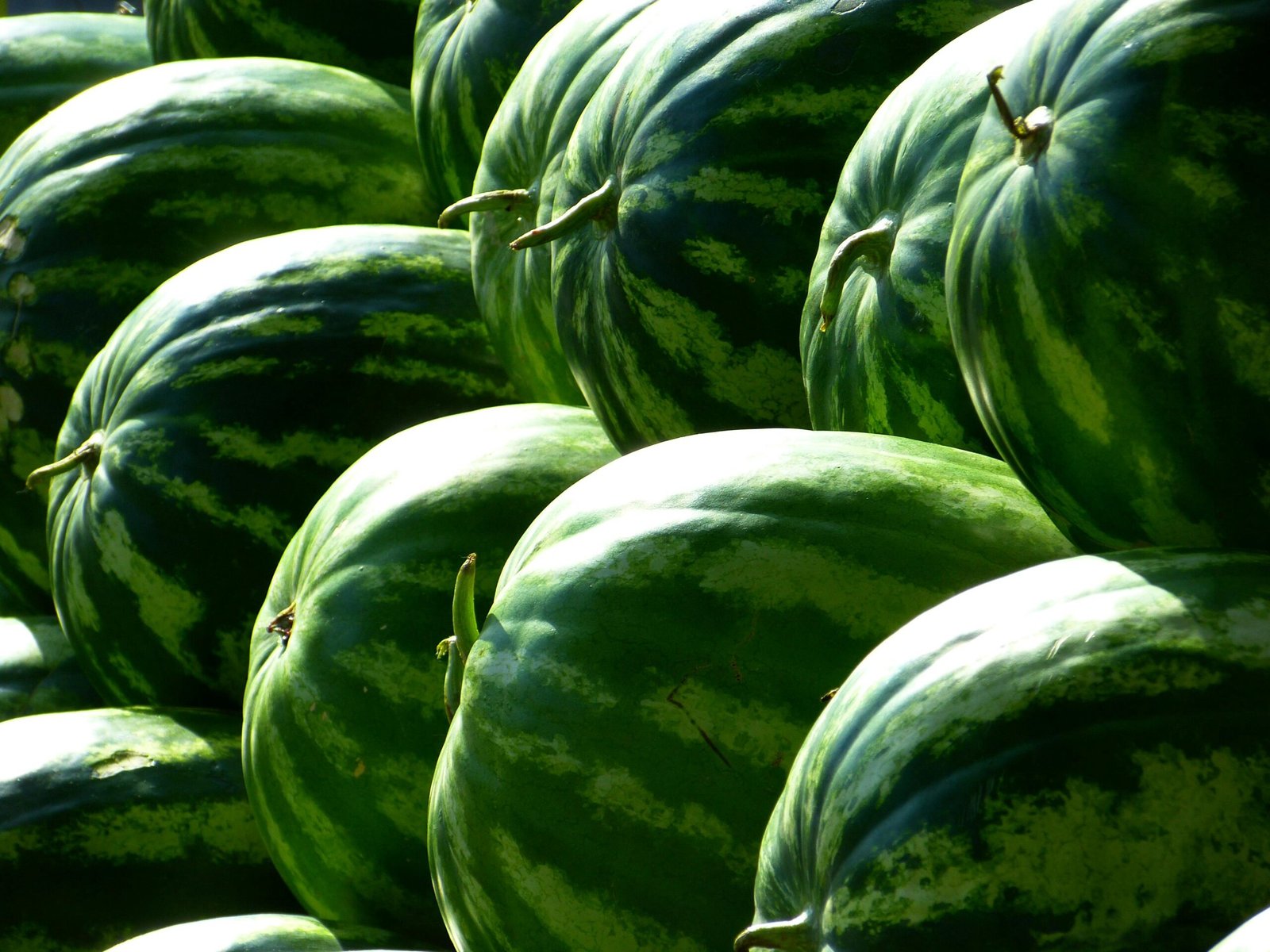
Watermelon, scientifically known as Citrullus lanatus (or Citrullus aedulis Pang), is an annual plant native to the tropical regions of Africa. A member of the Cucurbitaceae family, it is widely cultivated in various regions of Morocco, including Souss Massa, Marrakech, Loukkos, and Saïs. Highly valued for its nutritional qualities and its ability to adapt to diverse climatic conditions, watermelon is a vital crop in Moroccan agriculture. This article explores the different aspects of watermelon cultivation in Morocco, from its agronomic requirements to its harvest.
Edaphoclimatic Requirements
Watermelon is a plant that requires specific conditions to thrive. It is highly demanding in terms of heat and light. Some varieties are sensitive to the length of daylight, though long days are always favorable for its growth. Compared to other cucurbits such as melons or zucchinis, watermelon is slightly more demanding in terms of heat. For successful cultivation, it requires a warm temperature, well-drained soil, and moderate humidity.
Watermelon grows best in light, fertile soils that are rich in organic matter, with a pH slightly acidic to neutral (6-7). Due to its high light requirements, areas with abundant sunlight are ideal for its cultivation.
Watermelon Varieties
Several varieties of watermelon are cultivated in Morocco, which can be broadly categorized into two main types:
- Seeded Fruits: Popular varieties include Sangria, Fiesta, Calsweet, Royal Sweet F1, Sultan, Sweet Baby, Baby Doll, Tiger Baby, Sugar Baby, Early Canada, and Klondike Blue Ribbon.
- Seedless Varieties (Triploids): Seedless watermelons are increasingly favored, especially for commercial and consumer reasons. Triploid varieties such as Nova, Laurel, Fire Cracker, and Ultra Cool are especially popular in international markets.
Sowing, Planting, and Soil Preparation
The sowing of watermelon in Morocco follows a process similar to other cucurbits. Seeds can be directly sown in the field or started in nurseries before transplanting. An effective method is seed pre-germination, where seeds are soaked overnight before being immediately sown in well-moist soil.
The spacing of plants in the field is crucial for optimal growth. Typically, plants are arranged with a distance of 2 meters by 1 meter between holes, which allows the plants to grow without excessive competition for resources.
Irrigation and Cultural Practices
Irrigation is a key factor in watermelon cultivation. The plant requires a regular water supply to ensure a high yield. In areas with favorable conditions, it is possible to grow watermelon with little or no irrigation, relying on natural rainfall. However, in most cases, two to three irrigations are necessary: one at the beginning of growth, another during the fruit enlargement phase, and a final one during maturation.
Generally, there is no need to prune or pinch watermelon plants, unlike other crops. However, hoeing and weeding are essential to control weeds. On average, two to three hoeings and weedings are done throughout the growing season.
Fertilization
Fertilization plays a crucial role in ensuring good watermelon production. At the time of planting, it is recommended to add 40 tons of manure per hectare, along with specific doses of mineral fertilizers: 60 kg of nitrogen (N), 120 kg of phosphate (P₂O₅), and 80 kg of potash (K₂O). During the growing season, a top-dressing fertilization can be applied during the last hoeing, with an additional 20 kg/ha of N, 40 kg/ha of P₂O₅, and 40 kg/ha of K₂O.
Phytosanitary Control
Like all crops, watermelon is susceptible to various pests and diseases. Pest control is essential to maintain both the quality and quantity of the harvest. The main phytosanitary threats to watermelon include:
- Aphids: Malathion is commonly used to control aphids.
- Slugs: Pyrellin treatment is effective for controlling slugs.
- Various Worms: Decis is used to eliminate these pests.
- Spider Mites and Other Arachnids: Keltane is used to control these pests.
- Fungal Diseases: Powdery mildew (treated with Topaz) and downy mildew (treated with Anteor) can affect fruit quality.
Harvest and Yield
Watermelon harvesting in Morocco usually occurs when the fruits have reached full maturity. Yields vary depending on climatic conditions and cultural practices, but the average yield is between 30 to 40 tons per hectare. Harvesting must be done carefully to avoid damaging the fruits, as this could affect their quality and shelf life.
Conclusion
Watermelon cultivation in Morocco is an essential part of the country’s agricultural sector, particularly in warm, sunny regions. With well-established agricultural practices, varieties suited to local conditions, and an expanding market, watermelon continues to play a key role in the agricultural economy of Morocco. However, to maintain high and sustainable yields, it is crucial to follow best cultural practices, control pests, and manage irrigation and fertilization effectively.