
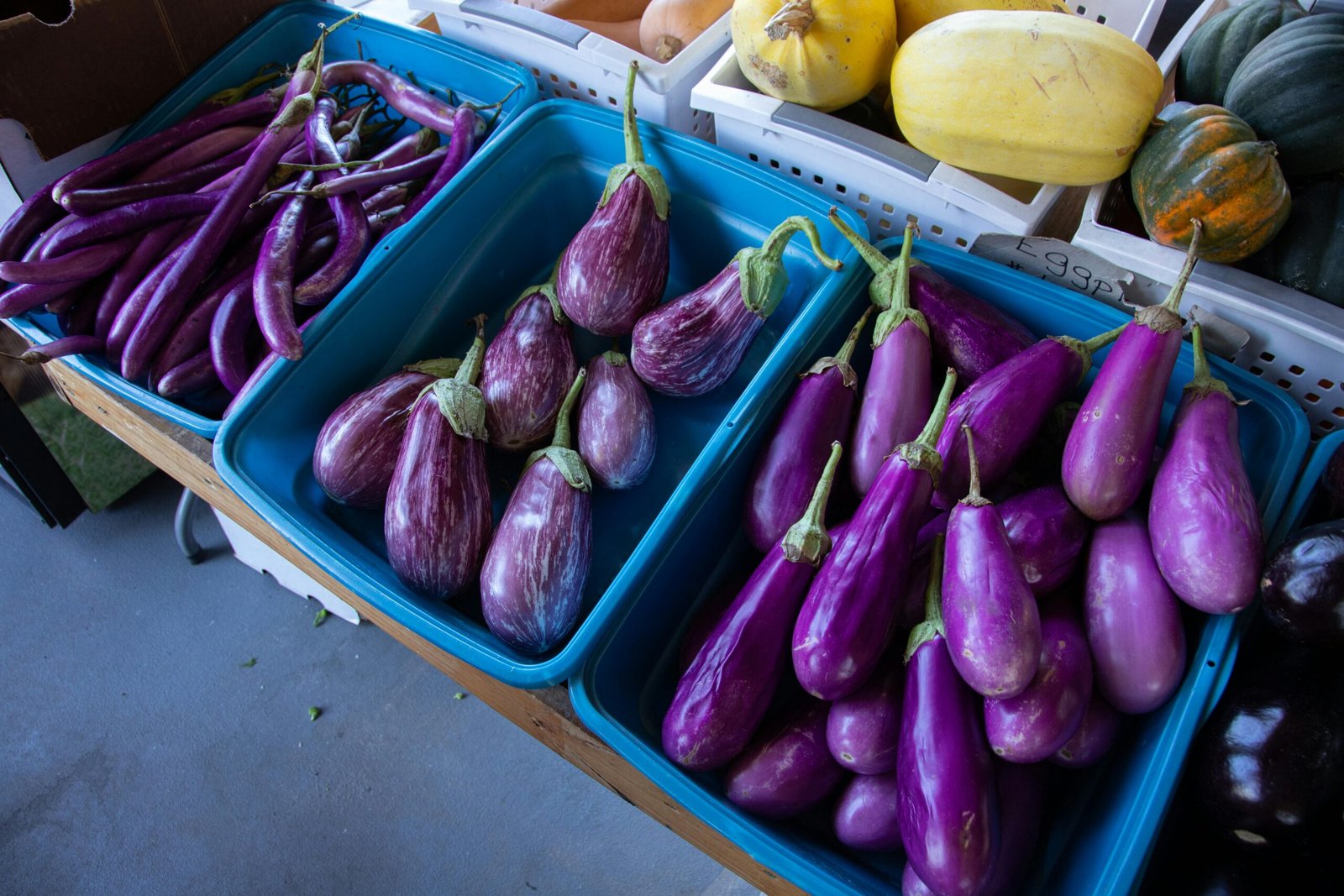
Eggplant (Solanum melongena L.) is a perennial plant that behaves as an annual in temperate climates. It belongs to the Solanaceae family, and in tropical countries, it grows as a shrub. Native to India, eggplant is one of the oldest cultivated crops, with plants described by ancient authors remaining largely unchanged over the past 2-3 millennia. The fruit’s nutritional quality is moderate, lying between that of peppers and tomatoes. In Morocco, eggplant cultivation is widespread, especially in regions such as Souss-Massa, Rabat, Gharb, and across the country.
Environmental Requirements
Eggplants have higher heat requirements compared to tomatoes and peppers. The plant is more sensitive to low temperatures than peppers, with an optimal growth temperature of around 27°C. As with other Solanaceae fruits, eggplants share similar requirements for light and soil, needing well-drained, fertile soil and ample sunlight to grow effectively. Their sensitivity to frost and low temperatures necessitates warm climates for successful cultivation.
Varieties, Sowing, Planting, and Soil Preparation
Various eggplant varieties are cultivated in Morocco, although most lack resistance to common diseases. In the United States, common varieties include American Black Bell, Black Beauty, Japanese Millionaire, and Italian Little Finger.
Eggplant propagation is exclusively done by transplants, even in field crops (both seasonal and early harvest). Seedlings must be grown in a nursery for successful cultivation. The care of the nursery is similar to that for peppers, requiring controlled conditions to ensure strong, healthy plants. Eggplant seeds are small (200-250 seeds per gram), and their germination capacity lasts for about 5 to 6 years.
Sowing dates vary based on the growing season:
- Off-season crops (greenhouse or field): Sowing in July.
- Early-season crops (field): Sowing in January-February.
- Main-season crops (field): Sowing in March-May.
- Greenhouse crops: Sowing in October-December.
Soil preparation, planting, and cultural practices (fertilization, irrigation, fertigation, trellising, pruning, phytosanitary treatments) follow the same guidelines as for peppers. Plants are typically spaced with sufficient room for proper growth, and attention is paid to factors like soil fertility and water management to optimize yields.
Harvesting
Eggplant fruits are firmly attached to the plant, so it is recommended to use pruning shears or a knife to harvest them. Regular harvesting is essential to promote continued fruiting along the plant’s branches. Typically, the harvest can occur 15-20 times during the growing season, depending on the plant’s vigor and environmental conditions.
The yield of eggplants varies significantly based on several factors, such as the variety used, the region of production, the cultivation type, and overall management practices. On average, field-grown crops can yield up to 40 tons per hectare, while greenhouse-grown crops can produce between 80 and 150 tons per hectare, benefiting from controlled conditions and extended growing seasons.
Conclusion
Eggplant cultivation is a valuable agricultural practice in Morocco, particularly in regions with warm climates and ample sunlight. The plant’s higher temperature requirements make it well-suited for the country’s climate, and its ability to grow in greenhouses further enhances its production potential. By following proper nursery management, soil preparation, and cultivation practices, Moroccan farmers can achieve high yields and meet the growing demand for eggplant in local and international markets.