
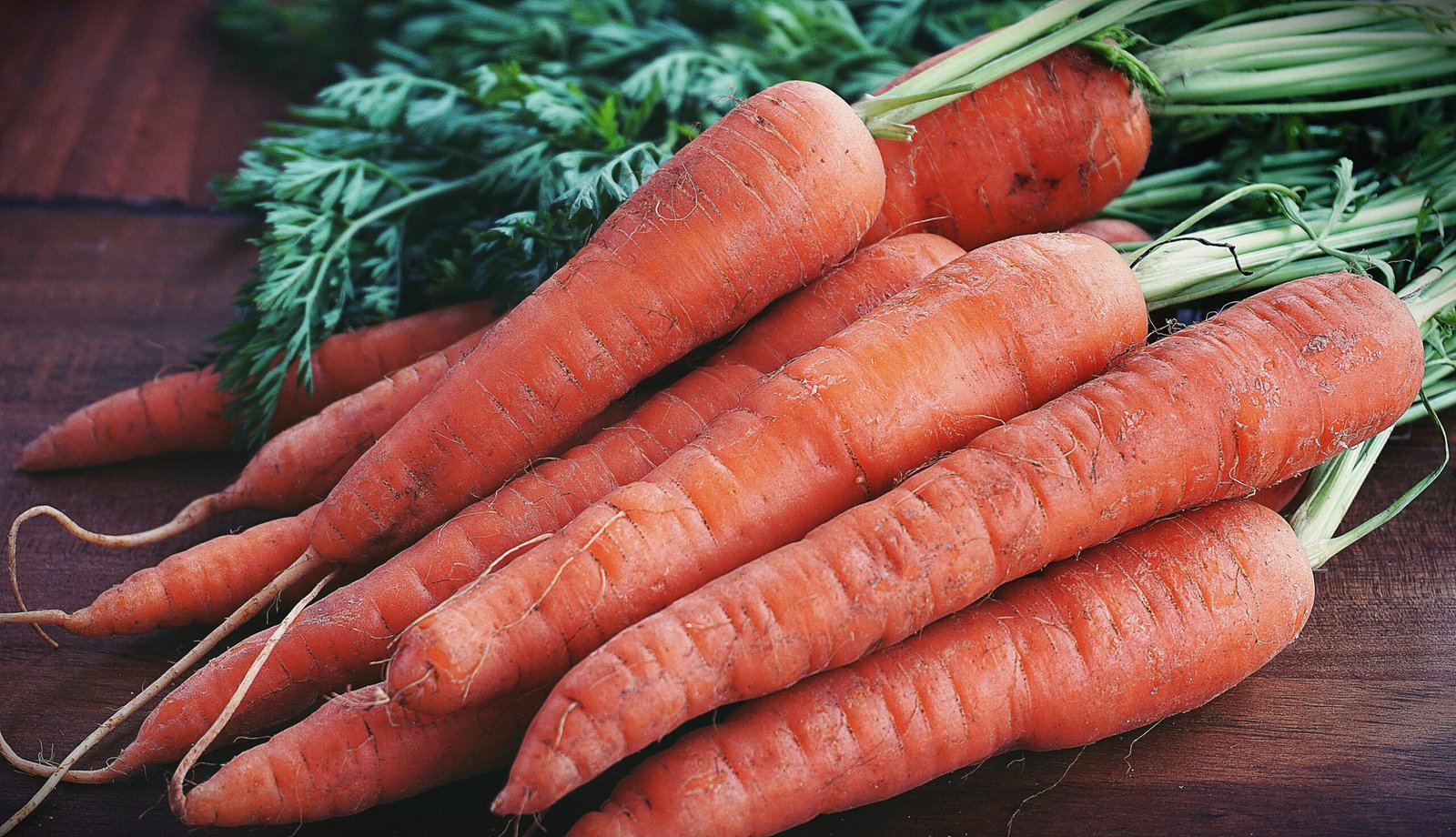
The carrot (Daucus carota L.) is a biennial plant belonging to the Umbelliferae family, native to Southern Europe. Its edible part is the fleshy root, which is highly nutritious, especially rich in vitamin A. In Morocco, carrots are cultivated throughout the country and year-round, playing an essential role in the local agricultural economy.
1. Botany and Importance of Carrot Cultivation
The carrot is a widely grown vegetable in Morocco due to its high nutritional value, particularly its rich content of vitamin A, which is beneficial for vision and immune system function. The cultivation of carrots in Morocco is not only important for local consumption but also contributes significantly to the agricultural exports of the country.
2. Pedoclimatic Preferences
Carrots are considered a cold-season plant, thriving in moderate temperatures:
- Germination Temperature: The optimal temperature for seed germination is 18°C, with a minimum of 7°C.
- Growth Temperature: The ideal temperature range for growth is between 20°C and 27°C, with the best root coloration achieved when the air temperature is between 16°C and 21°C. This temperature range should be maintained about three weeks before harvest.
- Tolerance to High Temperatures: Carrots slow down leaf growth at temperatures above 30°C, and excessive heat can lead to root odor, which diminishes the marketability of the product.
- Soil Requirements: Carrots are not very demanding in terms of soil quality, but rocky soils should be avoided to prevent forked roots. The ideal soil type is a sandy loam, with a pH range of 5.5 to 7. Heavy soils tend to produce roots with hair-like growth, which is undesirable.
3. Varieties, Soil Work, Sowing, and Planting
In Morocco, several varieties of carrots are cultivated, including:
- Common Varieties: Nantaise Améliorée, Racelido, Racedalbon, Nandor, Favor, and Ivor.
- Hybrid Varieties: To meet consumer demand for bright orange, smooth, and well-formed roots, hybrid varieties are often used, including American varieties such as Avenger, Caropak, Legend, Navajo, Flame, and Neptune.
Carrots are typically sown directly in the final planting location. Transplanting is avoided as it can cause forked roots. Seed density varies depending on whether the carrots are intended for fresh markets or for industrial processing. For industrial purposes, the sowing density is higher than for fresh market production.
- Sowing and Field Preparation: The soil must be plowed deeply, cleaned of any obstacles, rolled, and then shaped into basins or leveled for flat sowing. Irrigated crops are sown in narrow rows, while dryland crops are sown in wide bands, with a spacing of 0.7-0.8 meters between rows.
- Seed Requirements: The average seed requirement is 6-7 kg per hectare. Germination is slow, usually taking 25-30 days in cooler spring conditions. Some producers plant radishes in parallel rows to help mark the carrot rows and to utilize the land for early crops.
- Planting Density: Planting density ranges from 60,000 to 80,000 plants per hectare, depending on the variety and cultivation method.
4. Irrigation
Carrots require consistent moisture, but irrigation must be carefully managed:
- Pre-Sowing: The soil should be well-moisturized before sowing. After sowing, water intake is reduced to avoid seed rot and disease.
- Post-Germination: Light irrigation may be applied to facilitate uniform germination. After germination, it is crucial to maintain the soil at field capacity to avoid yield loss. An alternating cycle of wet and dry conditions can lead to root cracking.
- Water Management: Proper irrigation is critical for ensuring the right coloration of the carrots. Over-irrigation or poorly structured soil can cause discoloration and the formation of forked roots.
5. Fertilization
Proper fertilization is essential for carrot growth, particularly in poor soils:
- Base Fertilization: If manure is available, applying large quantities (20-40 tons per hectare) is beneficial. Additionally, 80 kg of nitrogen (N), 100 kg of phosphorus (P2O5), and 250 kg of potassium (K2O) per hectare should be applied.
- Top Dressing: After the 4th to 5th leaf stage, an additional 20 kg of nitrogen and 40 kg of potassium per hectare is applied. At the early root expansion stage, 40 kg of potassium per hectare is also added.
- Micronutrients: Carrots respond well to boron, copper, and manganese. However, excess nitrogen can lead to the formation of forked roots.
6. Pests, Diseases, and Control Methods
Carrot cultivation faces several pest and disease threats:
- Weeds: Weeds like Cuscuta (dodder) compete for nutrients and water. Effective weed control is necessary.
- Pests: Aphids, nematodes, and leaf miners are common pests. Integrated pest management (IPM), including the use of natural predators and cultural practices, is crucial for controlling these pests without relying too heavily on chemicals.
- Diseases: Carrots are susceptible to several diseases, such as Pythium, Sclerotinia, Rhizoctonia, and Macrophomina spp., which can cause root deformities. Powdery mildew (Oidium) also affects carrots under warm, humid conditions.
To prevent root diseases like Pythium violea, which causes cavities in the roots, it is important to avoid planting carrots on land that has previously grown alfalfa. Crop rotation should be practiced, with carrots not being planted in the same field for at least five years to prevent the buildup of pathogens.
7. Harvesting, Handling, and Storage Conditions
Carrots are harvested gradually, according to market demand. The roots can be sold either with their tops intact, in mounds, or as loose roots with the foliage removed. During transport, care should be taken to avoid damaging the roots.
- Average Yield: The national average yield is about 20 tons per hectare.
- Storage: Carrots can be stored in the soil for up to a month. However, for longer storage, they should be kept in a cold room at 0°C with 99% relative humidity. After washing them in a solution of 100 ppm chlorine (pH 6.5-7.5), they should be cooled. Carrots harvested from sandy soils do not require washing or removing foliage before storage. They can simply be shaken to remove adhering soil and packed in thin plastic for storage, which can last for 6-7 months.
Storage areas should be free from fruits like apples or pears, which produce ethylene, a gas that can cause carrots to develop an unpleasant taste.
Carrot cultivation in Morocco is a vital sector that requires careful attention to environmental conditions, soil health, irrigation management, and pest control. By using proper fertilization techniques, managing irrigation effectively, and implementing integrated pest management practices, farmers can ensure high-quality, marketable carrots year-round, both for local consumption and export.