
Plant and Importance of Cultivation in Morocco:
The pepper (Capsicum annuum L) is an annual plant belonging to the Solanaceae family. Originally from Mexico and Central America, it is widely cultivated in Morocco, particularly in the Souss region, coastal areas, and the Saïss region. The fruit of the pepper plant is highly valued for its excellent taste, nutritional qualities, and dietary benefits. It contains 10 to 13% dry matter, 4 to 6% sugars, 1.5 to 2% proteins, and high amounts of mineral salts, especially potassium salts, and vitamins, particularly vitamin C. In fact, peppers are 4 to 5 times richer in vitamin C than lemons. Pepper cultivation in Morocco is quite widespread, providing production in two main periods: from November to mid-January, and from March to late May. During the period from late January to March, production is low, while demand remains high.
Edaphoclimatic Requirements:
Peppers have higher heat requirements than tomatoes. Their optimal growth temperature is around 24°C, with a vegetative zero temperature at 8°C. However, plant growth slows down if temperatures drop below 13°C. Peppers are highly sensitive to low temperatures, and temperatures above 35°C reduce fruiting and photosynthesis. The plant also requires significant amounts of light. In orchards or greenhouses under banana trees, peppers do not produce satisfactory yields. Peppers are long-day plants, meaning they require long hours of daylight to thrive.
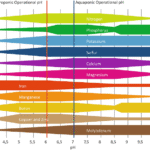
Regarding soil, peppers are highly demanding. Their requirements surpass those of tomatoes. The ideal soil for peppers should be deep, well-drained, warm, and rich in organic matter and easily available nutrients. Light soils are ideal for early cultivation, while silty-clay soils are suitable for seasonal crops. Peppers are more sensitive to soil acidity than alkalinity, with the optimal pH ranging between 6.5 and 7. Peppers are very demanding when it comes to soil moisture, requiring soil moisture levels of 80-85% for optimal yields. When the relative humidity of the air is low (below 60%) and temperatures are high, fruit growth may be hindered.
Peppers deplete soil nutrients quickly, so crop rotation is essential. The rapid spread of many diseases prevents monoculture. The best yields are obtained from newly acquired or virgin land that has not been used to grow another solanaceous crop for the past 4 to 5 years. Peppers are a good rotational crop for root vegetables.
Varieties, Seeding, Planting, and Soil Work:
There are numerous pepper varieties available on the Moroccan market, including:
- Long-type: Andalus, Marconi, Belconi
- Bell-type: Yolo Wonder, Capistrano, Hybell, Bell Captain, King Arthur, Murango
- Filet-type: Hy Fry, Biscayne, Gypsy, Sweet Wax, Red Cherry
Choosing a variety should depend on the region’s characteristics (edaphoclimatic conditions, market demand, length of the growing cycle, etc.). Pepper propagation is done exclusively by seedlings, even in field cultivation (both seasonal and early crops). Seedlings must be produced in a nursery to ensure successful cultivation. The nursery can be a large tunnel or a well-sealed, warm, well-ventilated greenhouse with a soil-covered plastic mulch.
For one hectare, approximately 250-300 grams of seeds are required, with about 150-200 seeds per gram. The seeds remain viable for 4 to 5 years. It’s recommended to plant enough seeds to replace any missing plants at the time of planting. Seed sowing is done in cell trays, with one seed per cell, and the cells are filled with peat moss. For one hectare, 250-300 bags of 18 kg of peat are required. After sowing, the trays should be covered with a 20-micron plastic film, which should be removed once the seedlings emerge. Protect the nursery from rats and mice by using rodenticides.
Sowing dates depend on the intended production period. For early crops, sowing takes place from August to February in the Agadir region, and from January to February along the rest of the Atlantic coast. For seasonal cultivation, sowing is done from late January to March, especially in inland regions. For late-season crops, sowing occurs in June and July.
Planting takes place 1 to 2 months after sowing in cold periods and 15 to 25 days in warm periods when the plants have 2-3 true leaves. During the month before planting, deep plowing at 35 cm is carried out, followed by cover cropping to break up clumps, leveling the land if necessary, applying and incorporating base fertilizers (organic and mineral), setting up windbreaks, and marking planting lines. Planting occurs when seedlings reach the 2-3 leaf stage or, if sown in pots, when the flower buds are visible, typically 50 to 60 days after sowing.
Irrigation and Cultural Practices:
Pepper plants require about 400 mm of water during their vegetative period and 200 to 400 mm during the harvesting period, amounting to 600 to 800 mm per cycle. The main goal of any irrigation system is to provide the plant with the necessary amount of water at the right time. Improper irrigation can have severe consequences on production since the pepper plant has a limited ability to restore its root system. To ensure proper root restoration and seedling recovery, the following practices are recommended:
- Irrigate immediately after planting and stop irrigation.
- The plant may show signs of water stress, especially around midday, but this is not a concern.
- The second irrigation should be applied once the plants show signs of recovery, with dark green leaves.
During hot conditions, it’s essential not to let the plants dry out; light irrigation is recommended, particularly in sandy soil. Between the first two irrigations, avoid tilling the soil to prevent disturbing the root system. After the second irrigation, watering should remain infrequent until full flowering, after which irrigation becomes more regular. Any water deficit during this phase can significantly reduce yields.
Cultural practices include staking, which helps support the branches that bear fruit, ensuring proper leaf exposure to light and reducing production loss from breakage. Staking involves placing stakes 0.6-1 m above the ground, spaced 1.5 to 2 m apart, and attaching two tiers of reeds or strings parallel to the planting rows at 35-40 cm and 60-80 cm, respectively. Pruning consists of removing axillary buds that grow on the main stem as the plant develops. This is done in the morning when the shoots are still brittle, and the operation is repeated depending on the plant’s growth. Leaf removal begins when the first yellowing leaves appear, improving air circulation around the base of the plant.
Fertilization:
The recommended base fertilization for most soils with average fertility is as follows:
- Decomposed manure: 40-50 tons/ha
- Nitrogen (N): 100 kg/ha, in the form of ammonium sulfate or urea
- Phosphorus (P): 150 kg/ha, in the form of superphosphate (45%)
- Potassium (K): 120-150 kg/ha, in the form of potassium sulfate or KCl, except in soils with high salinity
Peppers require significant amounts of both mineral and organic fertilizers. Fresh manure is unsuitable for peppers, and the best results are obtained when using well-decomposed manure. The nutrient needs of peppers vary according to their growth stage:
- Stage 1 (approx. 10 weeks after planting): Slow growth with low nutrient needs.
- Stage 2 (approx. 10 weeks): Rapid growth and initial production; high nutrient requirements.
- Stage 3 (10 to 15 weeks): Intensive growth and production (accounting for 70% of total harvest); highest mineral consumption.
Generally, fertigation is used, and appropriate nutrient solutions are applied based on the growth stages: 1-1-1, 1-0.5-1.2, and 1-0.2-2.5. Around 30 kg of nitrogen per hectare are applied every 10 days. Other elements are calculated based on nitrogen requirements.
Phytosanitary Protection:
The nursery must be well maintained, with treatments to combat caterpillar larvae (using insecticides such as endosulfan, methomyl, or methamidophos), aphids (with products like pirimicarb, isolane, dimethoate, methomyl), and rodents (using poisoned baits). Fungicide treatments such as maneb, mancozeb, or similar products can help prevent fungal infections. It is recommended to use preventive treatments for major pathogens, particularly against powdery mildew, grey mold (Botrytis cinerea), mites in hot weather, downy mildew, Rhizoctonia, and sunburn (due to excessive leaf removal). Follow the instructions on treatment product labels for the correct dosage.
Harvest:
Pepper fruits are firmly attached to the plant, and it is recommended to use pruning shears or a knife for harvesting. For fresh market varieties, the harvest occurs when the fruit is still green, before ripening, while for industrial varieties (like those used for paprika), the fruit is harvested when fully ripe. Regular harvesting encourages fruiting on the branches. Green fruit can be harvested 15-20 times, while red fruit is typically harvested 2-3 times. Yield varies greatly depending on variety, growing region, crop type, and care. Yields can reach 20 tons for 2-3 harvests, 40 tons for field-grown crops, and 80 tons for greenhouse-grown crops.